
Qwen4-Max for Enterprise: Deployment Considerations
Share this post:
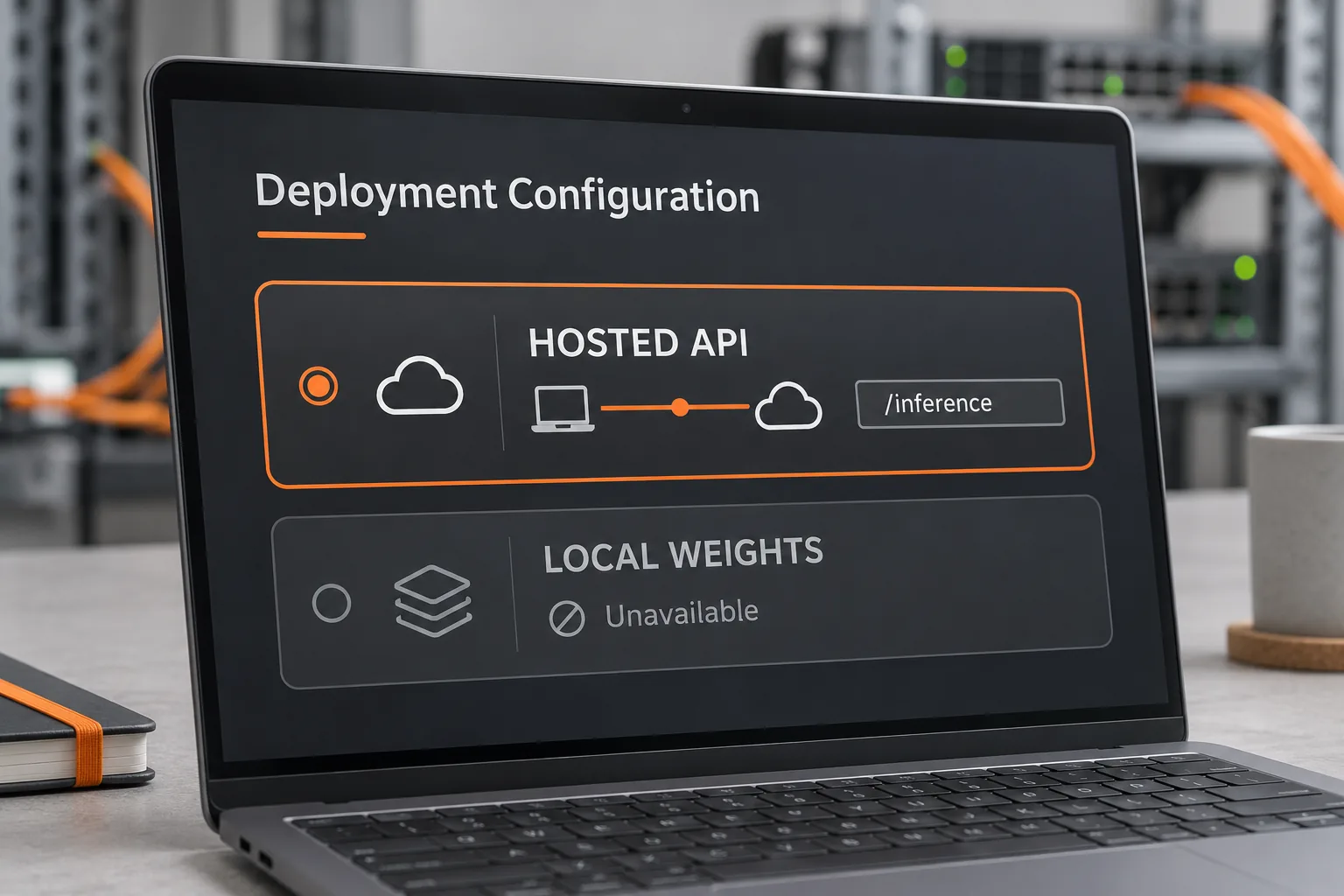
Qwen4-Max is a legitimate enterprise option for cost-sensitive, long-context, multimodal-understanding workloads, but the single fact that should reshape how any team evaluates it is a deployment decision, not a benchmark score. Alibaba broke its own open-weight tradition for this flagship tier. Qwen4-Max ships API-only, with no downloadable weights, which means a team that chose the Qwen family specifically because it offered a self-hosting or air-gapped option alongside a hosted API now has to re-verify that assumption at the model tier, not take it for granted across the family the way earlier Qwen generations allowed.
What Actually Changed Architecturally, and Why It Matters for Cost
Qwen4-Max is a 2.4 trillion parameter mixture-of-experts model activating 71 billion parameters per token, 25% fewer than the prior generation at the same total scale, plus a 328 billion parameter n-gram embedding component that trades some transformer computation for memorized pattern lookup. The context window reaches 1 million tokens, shared between input, reasoning, and output the way most current frontier models structure it, so budget your largest prompts against that shared pool rather than assuming a full million tokens of headroom for output alone. The detail worth highlighting specifically is pricing structure: Alibaba uses one flat price band across the entire 0 to 1 million token range, with no long-context surcharge of the kind other major providers apply past a fixed threshold. For workloads that genuinely need to process large document sets, full codebases, or extended logs in a single request, that pricing model is a real, verifiable cost advantage, not a marketing framing, and it’s worth weighing directly against the surcharge structures you’d otherwise pay elsewhere for the same workload shape.
The Open-Weight Break Is the Real Deployment Decision
Self-hosting, air-gapping, and fine-tuning are off the table for Max specifically
Earlier Qwen family releases include open-weight models that enterprises can evaluate for self-hosting, air-gapped operation, or fine-tuning, subject to each model’s licence and capabilities. Availability varies by model and tier. Qwen4-Max does not offer that path. Alibaba offers access through its hosted API, Token Plan subscription, and first-party applications; these access routes do not provide downloadable Max weights. Alibaba has said smaller, open-weight Qwen4 models will follow, but as of this release they have no name, no date, and no guarantee of matching Max’s capability, context window, or benchmark results. If your architecture or your compliance posture depended on treating the Qwen family as a flexible choice between cloud and self-hosted deployment, that flexibility doesn’t currently extend to the flagship tier, and planning around a future open-weight release that hasn’t been specified yet is a real risk, not a placeholder detail.
Where the Vendor’s Own Benchmark Chart Needs a Second Look
Cherry-picked comparisons and an unreplicated proprietary benchmark
Alibaba’s launch benchmarks compare Qwen4-Max against a specific set of chosen rivals, and that chart leaves out models that rank above it on the same public index, including Claude Fable 5.2 and Gemini 4 Carbon. A legal-domain benchmark that Qwen4-Max appears to lead inside Alibaba’s own comparison set ranks it seventh when checked against the actual public leaderboard, behind several models Alibaba didn’t chart at all. Alibaba’s proprietary Work360 benchmark, the one showing the largest reported gains and cost reductions, has no independent replication yet. None of this means the model is weak, it genuinely leads on several of Alibaba’s own published rows and tops the Chinese-model segment on at least one independent index, but it does mean the specific comparison framing in the launch materials was built to favor the release, which is exactly what you’d expect and exactly why it needs your own evaluation before it informs a production decision rather than the vendor’s.
Engineering Judgment: Where It Actually Fits in a Production Stack
Route Qwen4-Max toward the workloads its architecture and pricing genuinely favor: long-context document and codebase analysis where the flat pricing removes the surcharge penalty other providers apply, cost-sensitive high-volume tasks where the 25% price cut and reduced token consumption compound meaningfully, and long-horizon agentic work, Alibaba’s own examples include a continuous 48-hour agent run and a manufacturing workflow that cut iteration time by 95% through feedback-driven correction. Don’t route coding-critical or terminal-heavy work to it without testing first, since independent benchmarks show it trailing clearly behind Claude Opus 5.5 and Kimi K3.1 Pro on exactly those task categories, and the same caution applies to vision-precision work where it also lags the leading models tested. If you’re migrating prompts from an OpenAI or Anthropic-based stack, map the reasoning effort parameter explicitly rather than assuming direct compatibility, since Qwen4-Max uses a three-tier low, high, xhigh scale and translates other providers’ effort naming onto it rather than sharing the same vocabulary.
At SIRAYA, the deployment reviews for Qwen4-Max have centered less on where it ranks overall and more on two specific questions: does this workload actually need the open-weight flexibility the rest of the Qwen family offered, in which case Max isn’t the right tier regardless of its benchmark position, and does the task category match where Qwen4-Max’s architecture genuinely wins, long context and cost efficiency, rather than where the vendor’s own chart implies it competes evenly with the frontier. Getting those two questions right before committing avoids the more common mistake, adopting a model for its overall positioning and discovering the gap only once a coding-heavy production workload exposes it.