
Seedream 5.5 Image Editing: What Changes in Production
Share this post:
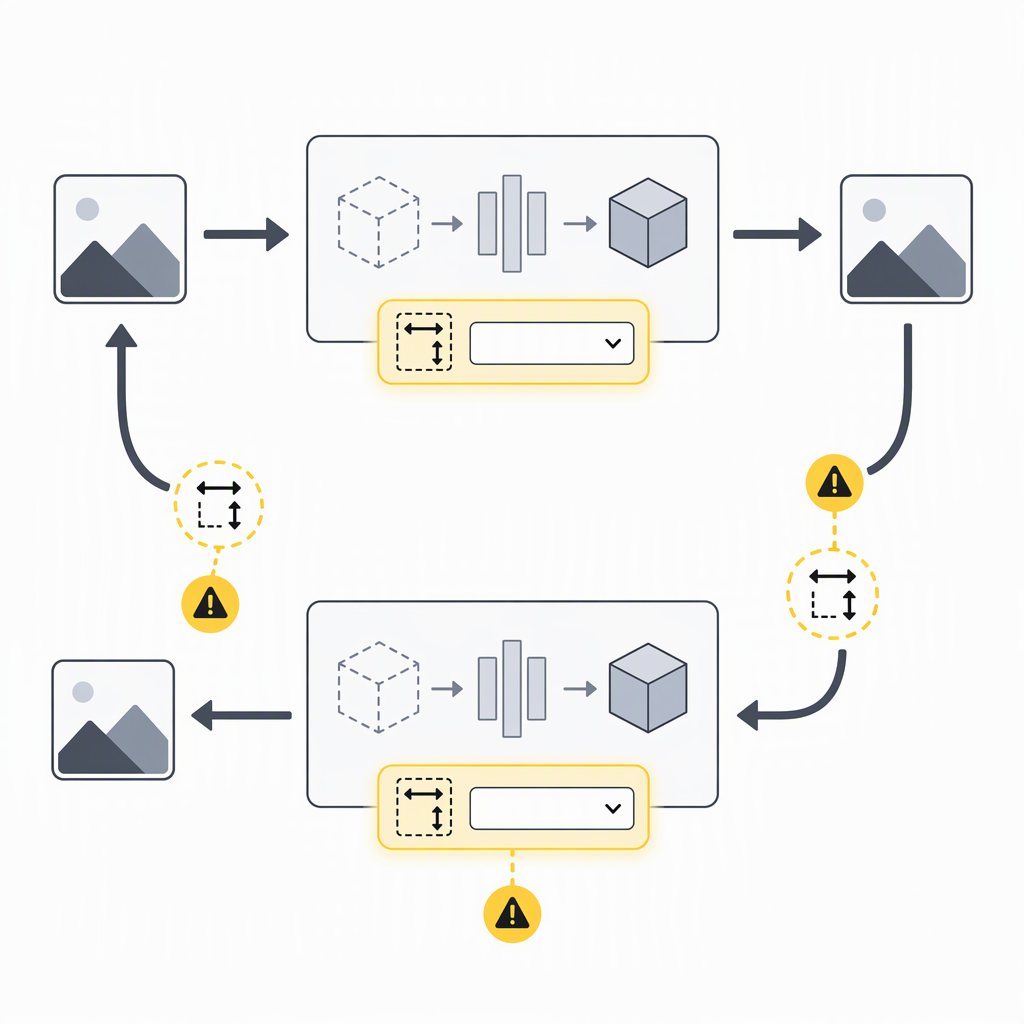
Seedream 5.5’s headline claim is up to 100 rounds of pixel-stable editing on the same image, and the detail most production teams will miss is that this stability is not something the model manages for you across a conversation. Every editing round is a stateless API call. Your pipeline has to resubmit the previous output as the next input explicitly, and two specific defaults, the output not inheriting the input’s aspect ratio, and a fixed list of size presets rather than custom dimensions, are exactly the kind of silent mismatch that breaks the “unedited regions stay pixel-identical” guarantee the whole feature is built around, without the API ever returning an error to tell you it happened.
What Actually Changed
ByteDance’s three headline upgrades for Seedream 5.5 are pixel-stable multi-round editing, native RGBA transparency, and improved realism and text rendering. The first is the most production-relevant: unedited regions are preserved at the pixel level across successive edits, addressing a real problem in prior-generation editing models where each round of feedback into the model compounds small errors into visible drift, a shifted shadow here, a shifted product color there, until five or six rounds in the image no longer matches an approved version. The second is a genuine workflow simplification: Seedream 5.5 generates native alpha-channel transparency directly from a text prompt, where the prior generation could only preserve transparency if you gave it a transparent image to start from, meaning a cutout asset no longer requires a separate background-removal step. Layer decomposition also expanded from 16 to up to 99 output layers, each returned with its stacking order, bounding box, name, and description. All of these figures, including the published text-corruption rates and realism comparisons against rival models, come from ByteDance’s own MagicArena evaluation and had not been independently verified at launch, which is worth treating as the starting hypothesis for your own testing, not a settled result.
The Stateless Architecture Behind “100 Rounds of Editing”
No editing memory, your pipeline owns the loop
The API documentation is explicit on this point in a way the marketing framing doesn’t emphasize: each request is independent, and for multi-round editing, you send the previous output as the next input yourself. There is no session identifier, no server-side conversation state, and no model-managed history across rounds. The “100 rounds” figure describes how well the model preserves fidelity when you feed its own output back in repeatedly, not a capability the platform manages on your behalf. If your application architecture assumes any kind of persistent editing session the way a chat API maintains conversation state, you’ll need to build that loop yourself, round by round, with your own storage of intermediate outputs.
Aspect ratio and size presets are the silent failure point
This is the detail worth building a specific safeguard around. The output of an edit does not automatically inherit the input image’s aspect ratio, and size must be selected from a fixed list of presets rather than specified as custom dimensions. If round two of your edit loop doesn’t explicitly request the same size preset as round one, the canvas itself can shift, and that shift undermines the pixel-level preservation guarantee the entire multi-round editing feature depends on, even though nothing in the response signals an error. The fix is straightforward but easy to skip under deadline pressure: pin the size preset explicitly in every round of your edit loop and verify it against the previous round’s output dimensions before submission, rather than trusting the model to carry that context forward.
Layer Decomposition Invents What It Can’t See
Layer decomposition is genuinely useful for production asset work, turning a flat image into a stack of editable layers without a manually recreated source file. But it has a correctness property worth flagging before you trust it for anything requiring accuracy: whatever sits behind a moved or decomposed object is invented by the model through inpainting, not recovered from real pixel data that happened to be hidden. For catalog and e-commerce work specifically, where the product layer itself needs to match an approved reference exactly, the practical guidance is to replace the decomposed product layer with the original source render rather than trusting the model’s reconstruction, treating the decomposition output as a convenient starting scaffold rather than a pixel-accurate extraction.
Engineering Judgment: Workload Fit and Verification Before Production
Independent rankings place Seedream 5.5 in the top ten for image editing specifically, while sitting around fourteenth for pure text-to-image generation from a blank prompt. That split matters for how you route a mixed pipeline: lean on Seedream 5.5 for edit-heavy production work, iterative client revisions, asset variation, background and element changes, and evaluate a different model for first-draft generation from scratch rather than assuming one model should own your entire pipeline. Pricing also varies meaningfully depending on which API aggregator or platform you access it through, not a single canonical rate, so benchmark actual cost against your real resolution and volume profile before committing to one integration path rather than trusting a single quoted number.
At SIRAYA, the review process for adopting a new image-editing model like Seedream 5.5 starts with building the exact round-trip loop a production pipeline will actually use, previous output back in as next input, size preset explicitly pinned, before trusting any of the vendor’s multi-round stability claims, because that loop is where the feature either holds up under real production pressure or quietly breaks in a way no error message will ever surface.